慧学(117):精读复刻论文《数智驱动营销下企业网络平台供应链的绿色产品策略研究》协调性分析(3)

分享兴趣,传播快乐,
增长见闻,留下美好!
亲爱的您,这里是LearningYard学苑。
今天小编为大家带来
“慧学(117):精读复刻论文《数智驱动营销下企业网络平台供应链的绿色产品营销策略研究》协调性分析(3)”。
欢迎您的访问!
Share interest, spread happiness,
increase knowledge, and leave beautiful.
Dear, this is the LearningYard Academy!
Today, the editor brings the
“Hui Xue (117): Intensive reading of the replicated article ‘Research on Green Product Marketing Strategy of Enterprise Network Platform Supply Chain under Data-driven Marketing’ coordination analysis (3)”.
Welcome to visit!
本期推文小编将从思维导图、精读内容、知识补充三个方面为大家介绍期刊论文《数智驱动营销下企业网络平台供应链的绿色产品营销策略研究》的协调性分析(3)。
In this issue, the editor will introduce the coordination analysis (3) of the journal article “Research on Green Product Marketing Strategy of Enterprise Network Platform Supply Chain under Data-driven Marketing” from three aspects: mind mapping, intensive reading content, and knowledge supplement.
一、思维导图(Mind mapping)
二、精读内容(Intensive reading content)
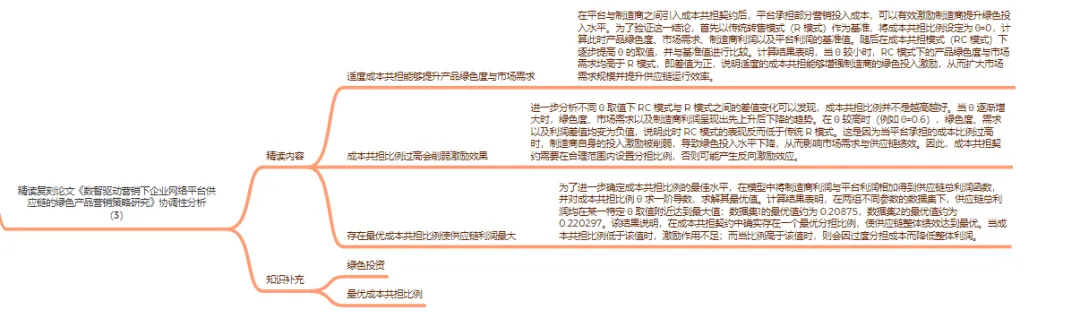
1、适度成本共担能够提升产品绿色度与市场需求(Appropriate cost-sharing can enhance the greenness of products and increase market demand)
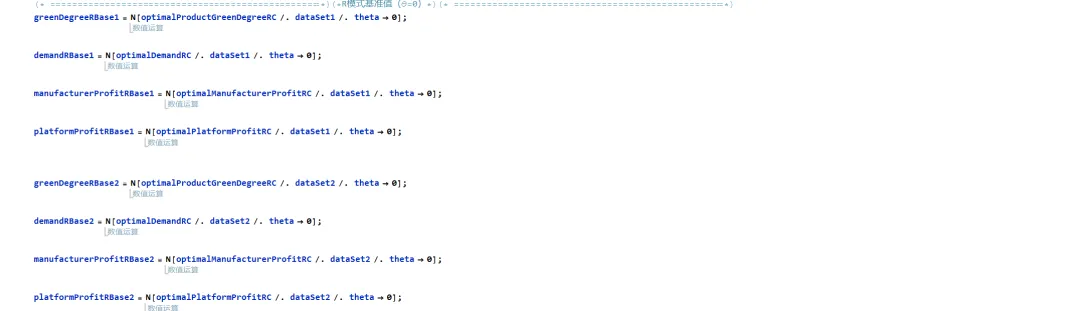
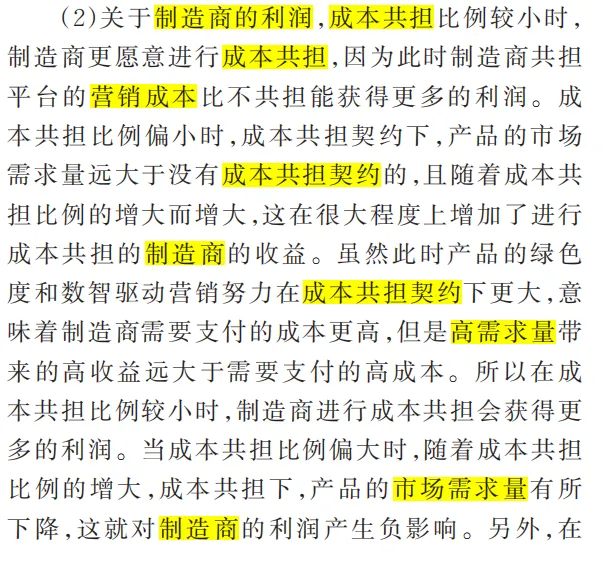
在平台与制造商之间引入成本共担契约后,平台承担部分营销投入成本,可以有效激励制造商提升绿色投入水平。为了验证这一结论,首先以传统转售模式(R 模式)作为基准,将成本共担比例设定为 θ=0,计算此时产品绿色度、市场需求、制造商利润以及平台利润的基准值。随后在成本共担模式(RC 模式)下逐步提高 θ 的取值,并与基准值进行比较。计算结果表明,当 θ 较小时,RC 模式下的产品绿色度与市场需求均高于 R 模式,即差值为正,说明适度的成本共担能够增强制造商的绿色投入激励,从而扩大市场需求规模并提升供应链运行效率。
Introducing cost-sharing agreements between platforms and manufacturers, where the platform bears a portion of marketing costs, can effectively incentivize manufacturers to increase their green investment levels. To verify this conclusion, we first used the traditional resale model (R model) as a benchmark, setting the cost-sharing ratio to θ=0, and calculated the baseline values for product greenness, market demand, manufacturer profit, and platform profit. Then, we gradually increased the value of θ under the cost-sharing model (RC model) and compared it with the baseline values. The calculation results show that when θ is small, both product greenness and market demand are higher under the RC model than under the R model, i.e., the difference is positive. This indicates that moderate cost-sharing can enhance manufacturers’ incentives for green investment, thereby expanding market demand and improving supply chain efficiency.
2、成本共担比例过高会削弱激励效果(An excessively high cost-sharing ratio will weaken the incentive effect)
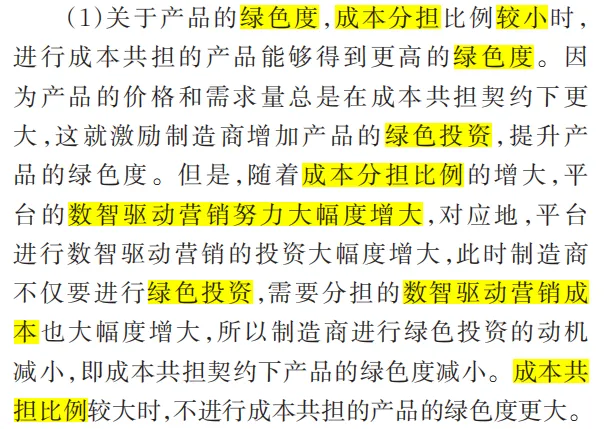
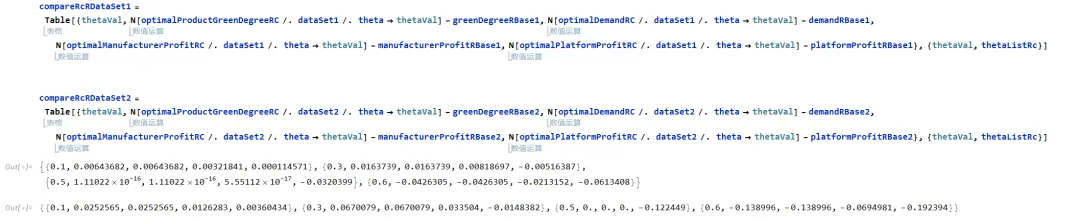
进一步分析不同 θ 取值下 RC 模式与 R 模式之间的差值变化可以发现,成本共担比例并不是越高越好。当 θ 逐渐增大时,绿色度、市场需求以及制造商利润呈现出先上升后下降的趋势。在 θ 较高时(例如 θ=0.6),绿色度、需求以及利润差值均变为负值,说明此时 RC 模式的表现反而低于传统 R 模式。这是因为当平台承担的成本比例过高时,制造商自身的投入激励被削弱,导致绿色投入水平下降,从而影响市场需求与供应链绩效。因此,成本共担契约需要在合理范围内设置分担比例,否则可能产生反向激励效应。
Further analysis of the cost-sharing difference between the RC and R models under different θ values reveals that a higher cost-sharing ratio is not necessarily better. As θ gradually increases, greenness, market demand, and manufacturer profits show a trend of first rising and then falling. At high θ values (e.g., θ=0.6), the differences in greenness, demand, and profit all become negative, indicating that the RC model actually performs worse than the traditional R model. This is because when the platform bears too high a proportion of costs, the manufacturer’s own incentive to invest is weakened, leading to a decrease in green investment levels, which in turn affects market demand and supply chain performance. Therefore, cost-sharing contracts need to set the sharing ratio within a reasonable range; otherwise, they may produce a reverse incentive effect.

3、存在最优成本共担比例使供应链利润最大(There exists an optimal cost-sharing ratio that maximizes supply chain profits)
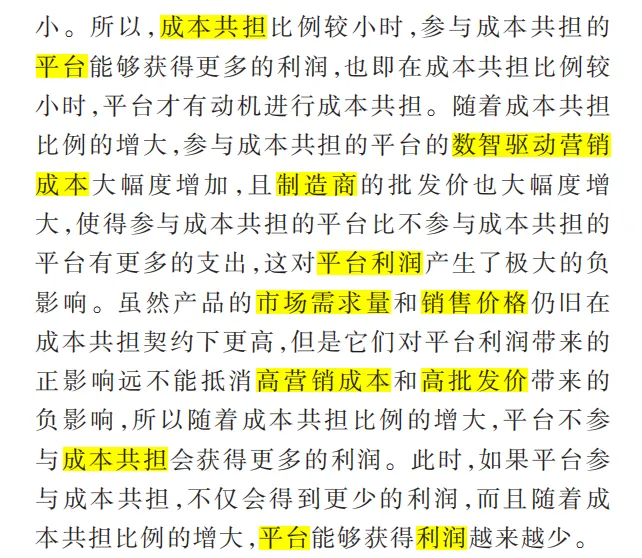
为了进一步确定成本共担比例的最佳水平,在模型中将制造商利润与平台利润相加得到供应链总利润函数,并对成本共担比例θ 求一阶导数,求解其最优值。计算结果表明,在两组不同参数的数据集下,供应链总利润均在某一特定 θ 取值附近达到最大值:数据集1的最优值约为 0.20875,数据集2的最优值约为 0.220297。该结果说明,在成本共担契约中确实存在一个最优分担比例,使供应链整体绩效达到最优。当成本共担比例低于该值时,激励作用不足;而当比例高于该值时,则会因过度分担成本而降低整体利润。
To further determine the optimal level of cost-sharing ratio, the model sums the manufacturer’s profit and the platform’s profit to obtain the total supply chain profit function. The first derivative of the cost-sharing ratio θ is then calculated to find its optimal value. The results show that, under two datasets with different parameters, the total supply chain profit reaches its maximum value near a specific θ value: the optimal value for dataset 1 is approximately 0.20875, and the optimal value for dataset 2 is approximately 0.220297. This result indicates that there is indeed an optimal cost-sharing ratio in cost-sharing contracts that optimizes the overall performance of the supply chain. When the cost-sharing ratio is below this value, the incentive effect is insufficient; while when the ratio is above this value, excessive cost sharing reduces overall profits.


三、知识补充(Knowledge supplementation)
1、绿色投资(Green investment)
绿色投资是以推动可持续发展为导向的一类资金投入方式,强调在经济增长的同时兼顾社会与环境效益,通常涉及环境保护、清洁能源开发和循环经济等领域。其核心在于通过污染治理、资源节约和生态保护等方式实现长期价值,因此逐渐发展为涵盖环保投资、社会责任投资等多种方向的经济学概念。绿色投资通常以经济效益、社会效益与生态效益的综合表现作为评价标准,强调绿色资本在推动绿色经济增长中的作用,同时也要求投资主体具备一定的环境责任意识。在实际应用中,这类投资既包括清洁能源项目建设、节能减排技术推广,也体现在绿色债券等金融产品创新上,涉及可再生能源、绿色建筑、生态农业等多个产业领域。从统计或研究角度看,绿色投资还可以根据界定范围不同划分为不同层次,例如以污染治理为主的较窄口径,以及涵盖资源高效利用等内容的较广口径。
Green investment is a type of capital investment oriented towards promoting sustainable development. It emphasizes balancing economic growth with social and environmental benefits, typically involving areas such as environmental protection, clean energy development, and the circular economy. Its core lies in achieving long-term value through pollution control, resource conservation, and ecological protection, thus gradually evolving into an economic concept encompassing environmental investment, socially responsible investment, and other areas. Green investment is usually evaluated based on the comprehensive performance of economic, social, and ecological benefits, emphasizing the role of green capital in driving green economic growth while also requiring investors to have a certain level of environmental responsibility. In practical applications, this type of investment includes clean energy project construction, the promotion of energy-saving and emission-reduction technologies, and innovation in financial products such as green bonds, involving multiple industrial sectors such as renewable energy, green buildings, and ecological agriculture. From a statistical or research perspective, green investment can also be divided into different levels based on its definition, such as a narrower scope focusing primarily on pollution control, and a broader scope encompassing resource-efficient utilization.
2、最优成本共担比例(Optimal cost-sharing ratio)
最优成本共担比例是指在合作关系或供应链协作中,各参与主体为实现整体收益最大化或系统效率最优,对某项成本按照一定比例进行分担时所对应的最佳分配比例。该比例通常通过模型分析或优化方法确定,使得各方在承担成本的同时能够获得合理收益,从而提高合作稳定性并激励成员积极参与。在实际应用中,最优成本共担比例常用于研发合作、广告投入、减排投资以及供应链协调等情境,通过合理分配成本负担,既能减少单个主体的压力,又能提升整体决策效率和合作绩效。
The optimal cost-sharing ratio refers to the best allocation ratio among participating entities in a cooperative relationship or supply chain collaboration to maximize overall benefits or optimize system efficiency when sharing a certain cost. This ratio is usually determined through model analysis or optimization methods, ensuring that each party receives reasonable benefits while bearing costs, thereby improving cooperation stability and incentivizing active participation. In practical applications, the optimal cost-sharing ratio is commonly used in scenarios such as R&D collaboration, advertising investment, emissions reduction investment, and supply chain coordination. By rationally allocating cost burdens, it can reduce the pressure on individual entities while improving overall decision-making efficiency and collaborative performance.
今天的分享就到这里了,
如果您对文章有独特的想法,
欢迎给我们留言,
让我们相约明天。
祝您今天过得开心快乐!
That’s all for today’s sharing.
If you have a unique idea about the article,
please leave us a message,
and let us meet tomorrow.
I wish you a nice day!
翻译:Google翻译
参考资料:百度、Chatgpt
参考文献:陈翼, 孙晓曼, 张宁等. 数智驱动营销下企业网络平台供应链的绿色产品营销策略研究 [J]. 中国管理科学, 2024, 32(5): 81-92.
本文由LearningYard学苑整理发出,如有侵权请在后台留言!

文案|chen
排版|chen
审核|yy