《经济学人》| 即便能源市场迎来最乐观情绪,高油价的阴霾将比伊朗战争更长久
Even the best-case scenario for energy markets is disastrous
Whatever happens, high prices will outlive the Iran war
即便能源市场迎来最乐观情绪,亦是灾难
无论局势如何演变,高油价的阴霾将比伊朗战争更长久
The Economist | March 24st, 2026
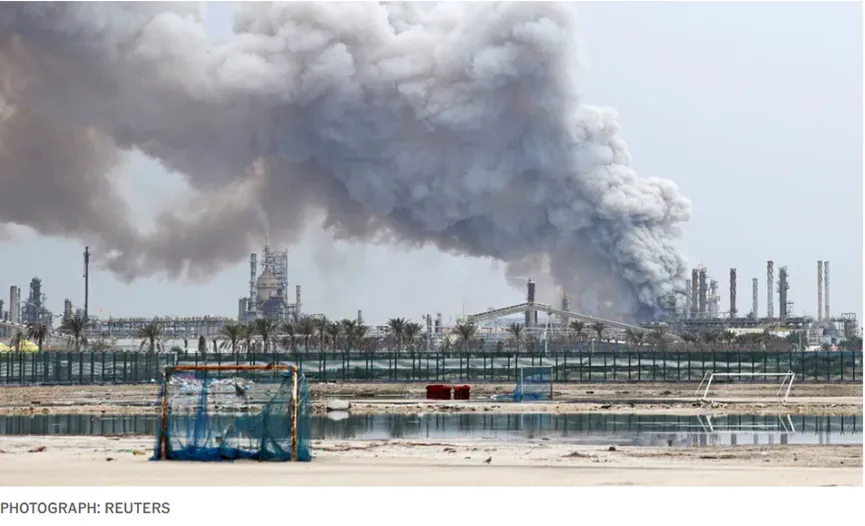
The third Gulf war is now in its fourth week. Every day that Iranian strikes on ships keep the Strait of Hormuz shut, around a fifth of the world’s output of oil and liquefied natural gas (LNG) remains stranded. Every day, therefore, traders update how much supply is lost for the year. As their estimates rise, so do energy prices. Brent crude, at $112 a barrel, is 54% dearer than before hostilitiesbegan. Gas prices in Europe are up by 85%.
第三次海湾战争已进入第四周。伊朗对航运的袭击导致霍尔木兹海峡持续封锁,每日约有占全球五分之一产量的石油与液化天然气(LNG)处于“搁浅”状态。因此,交易员们每天都在重新估算全年的供应损失。随着预期损失攀升,能源价格也水涨船高。布伦特原油目前报每桶 112 美元,较战前上涨了 54%;欧洲天然气价格则飙升了 85%。
The reason they are not much higher is that investors expect flows to resume soon. Financial bets that prices will fall (put options) outnumber those expecting a rise (calloptions) for July deliveries and onwards, according to Société General, a bank (see chart 1). Account for transport lags, in other words, and investors expect normality by May.
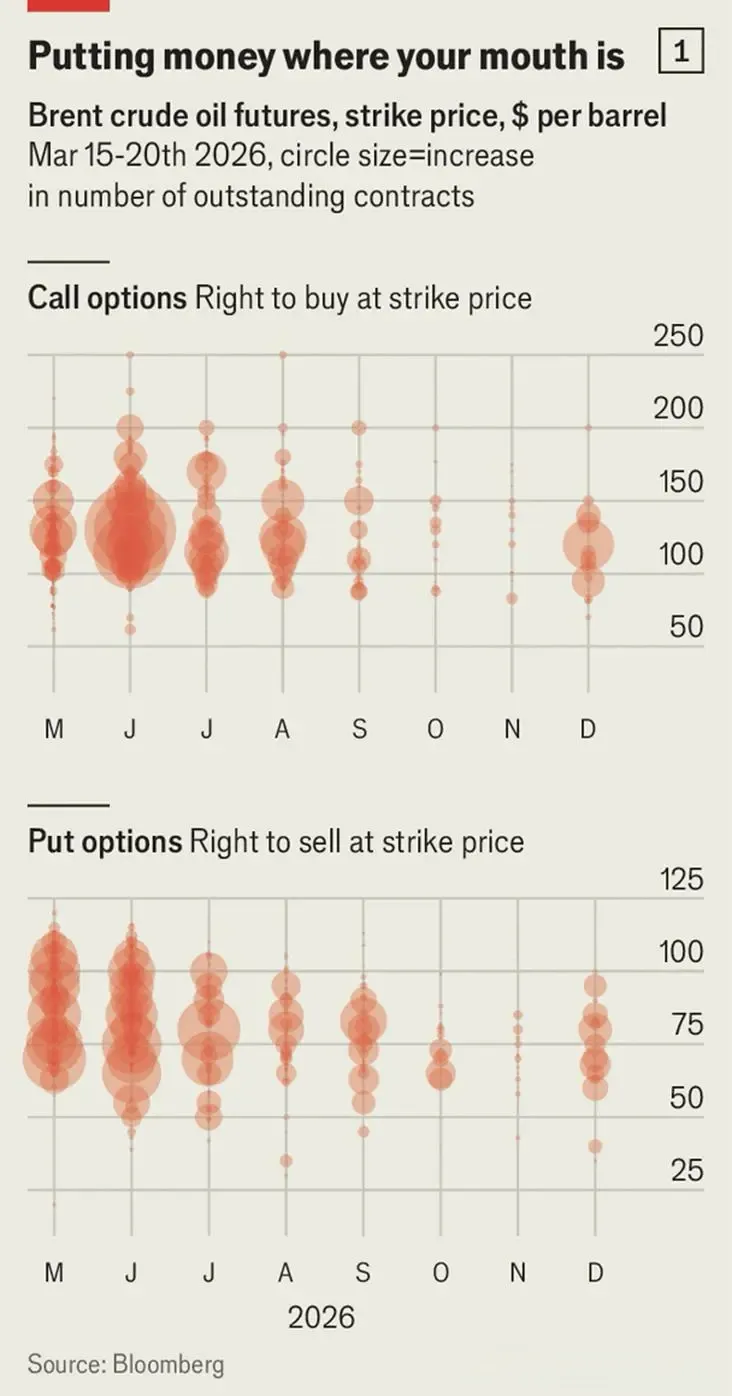
价格之所以没有进一步失控,是因为投资者预期能源流动很快会恢复。法兴银行的数据显示(见图 1),针对 7 月及以后交付的合约,看跌期权(Put options)的数量超过了看涨期权(Call options)。换句话说,考虑到运输滞后期,投资者预计市场将在 5 月恢复常态。
To assess those expectations, The Economist calculated how long normalisationwould take if the war ended today. Even if Iran accedes to Donald Trump’s threat on March 21st to unblock the strait within 48 hours or face strikes on its power plants, a big “if”, global oil and gas markets would remain undersuppliedfor months, hurting the world economy.
为了验证这些预期,《经济学人》计算了即便战争在今日戛然而止,市场正常化究竟需要多久。就算伊朗屈服于唐纳德·特朗普 3 月 21 日发出的最后通牒——在 48 小时内解除封锁,否则其发电厂将面临轰炸——这仍是一个巨大的假设。即便如此,全球油气市场仍将面临长达数月的供应短缺,重创全球经济。
For energy markets to right themselves once Hormuz reopens, three things need to happen. First, Gulf producers must restore output to pre-war levels. Second, ships must ferry that output to refiners abroad. And third, those refiners must process it into usable fuel. Each stage of this industrial relay takes time.
霍尔木兹海峡重启后,能源市场要重回正轨需跨越三道关卡:首先,海湾产油国必须将产量恢复至战前水平;其次,船只必须将这些产量运往海外炼油厂;最后,炼油厂需将其加工成可用燃料。这场工业接力赛的每一棒都极耗时间。
Start with production. Unable to export and faced with storage constraints, Gulf countries have already cut their output of crude by a combined 10m barrels per day (b/d), equivalent to 10% of the global total and 40% of their pre-war levels (see chart 2). To bring this back online, producers must check everything still works and clear pipe blockages. Only then can they restart wells by restoring pressure—and gently, to avoid damaging reservoirs. Revving up the separators, compressors and treatment plants where oil goes for initial processing will take additional time.
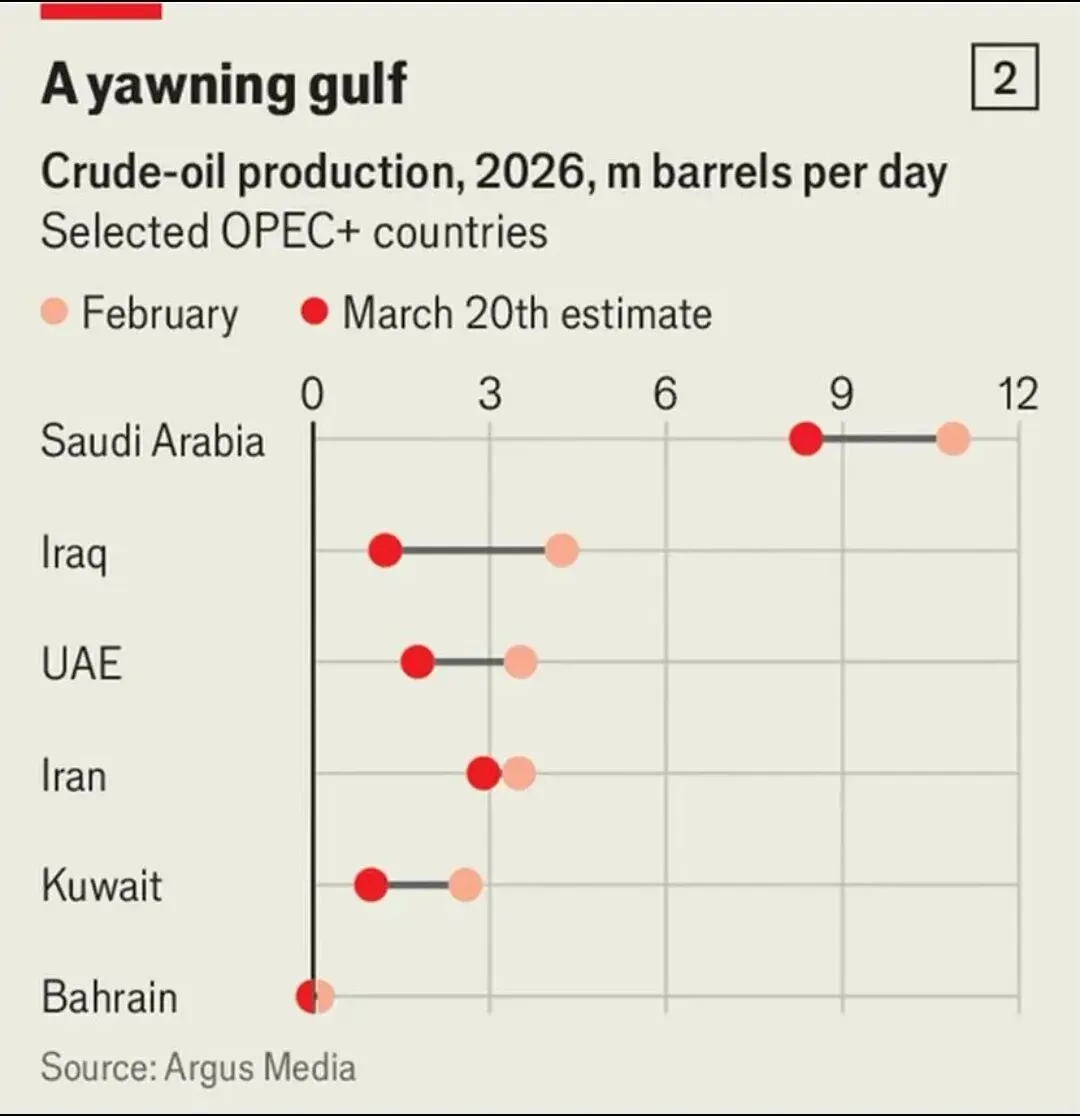
首先看生产端。由于无法出口且面临仓储瓶颈,海湾国家已累计削减原油产量 1,000 万桶/日,相当于全球总产量的 10%,占其战前产量的 40%(见图 2)。要重启生产,生产商必须检查所有设备运行状况并清理管道堵塞。随后,他们需通过恢复压力来重启油井——过程必须温和,以防损坏油层。而启动初步加工所需的离心机、压缩机和处理厂则需要额外的时间。
Although, as members of OPEC, Gulf states are used to modulating output up and down in days, the latest cuts are more sudden and deeper than anything they have faced before. Experts reckon all this will take between two and four weeks.
尽管作为欧佩克(OPEC)成员,海湾国家习惯于在几天内调节产量,但此次减产的突发性和深度是前所未有的。专家预计,这一过程将耗时两到四周。
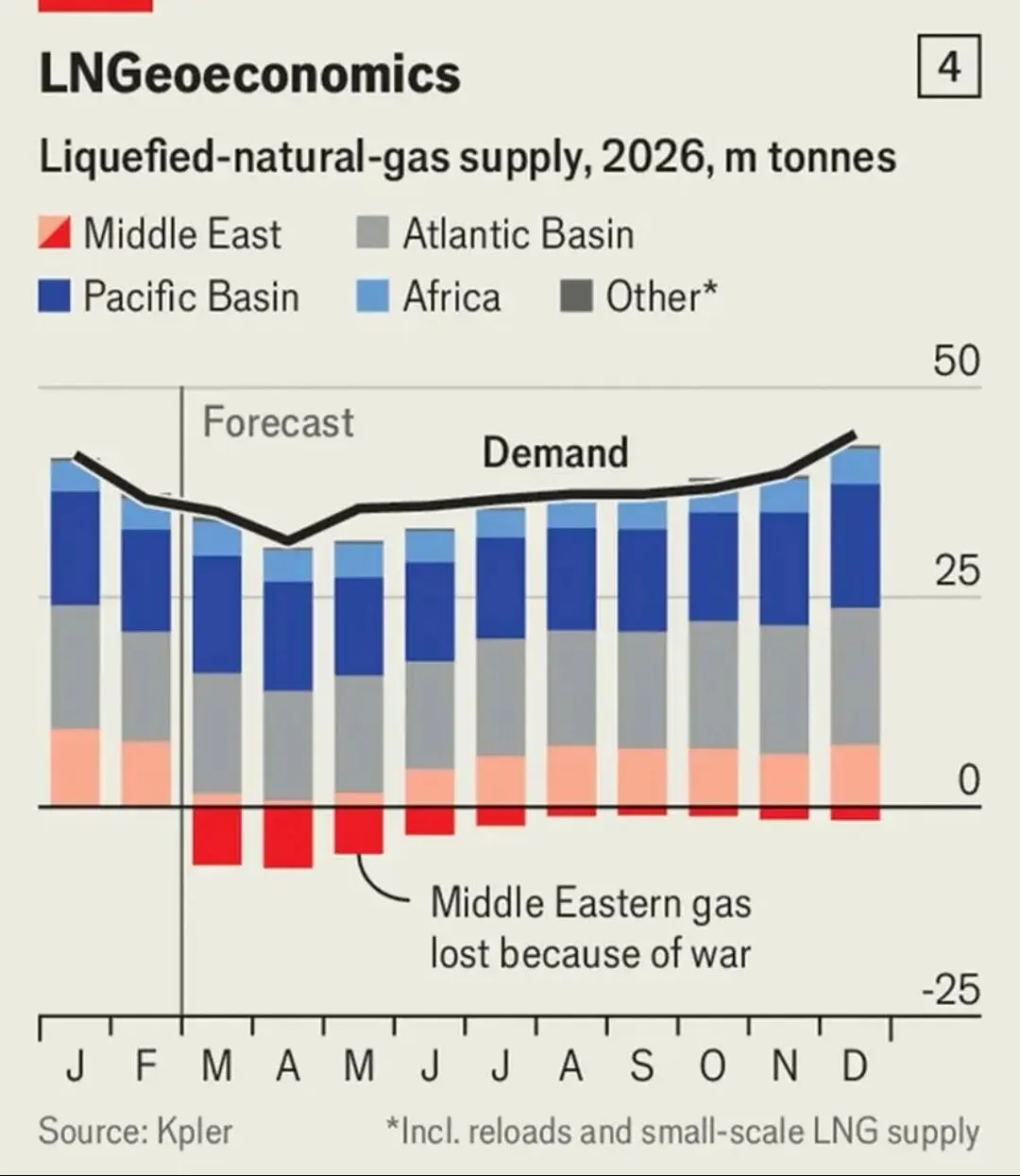
Gas looks even gnarlier. Qatar’s Ras Laffan, which supplies nearly a fifth of the world’s LNG, has been shut since March 2nd after an Iranian drone strike. In the past week a missile strike badly damaged two of the plant’s 14 liquefaction units, accounting for 17% of its capacity—and 3% of global supply. Repairs will take 3-5 years, Qatar’s energy minister says, and a planned expansion will be delayed. The full extent of the damage elsewhere is unclear. But weeks of repairs are probably needed for any operations to resume even in facilities that suffered less of it. And mending is just the start. The equipment must then be purged of moisture to ensure that pipes do not crack as it is cooled back down to -160°C. Rush the process and the metal contracts unevenly, shattering welds. Anne-Sophie Corbeau of Columbia University reckons that all this could take up to seven weeks.
天然气的情况更为棘手。供应全球近五分之一 LNG的卡塔尔拉凡角(Ras Laffan)工厂,在 3 月 2 日遭到伊朗无人机袭击后一直处于停产状态。上周,导弹袭击严重损毁了该厂 14 台液化机组中的两台,占其产能的 17%,相当于全球供应的 3%。卡塔尔能源部长表示,修复需耗时 3 至 5 年,原定的扩产计划也将推迟。其他地区的损毁程度尚不明朗。但即便受损较轻的设施,可能也需要数周维修才能复产。而维修只是开始,设备必须先清除水分,确保在冷却回-160°C时管道不会开裂。如果操之过急,金属收缩不均会导致焊缝碎裂。哥伦比亚大学的 Anne-Sophie Corbeau 认为,这一过程可能长达七周。
Next comes shipping. In the event of a ceasefire, most captains of the 480 or so vessels stranded in the Gulf would want to see several days free of attacks before attempting to exit. Most tankers are already loaded and the strait can handle heavy traffic, so the backlog could be cleared in a fortnight. In principle, new ships could then come in to pick up the gradually restarting production.
其次是航运环节。一旦停火,滞留在海湾内的约480 艘船只中,大多数船长会观察几天,确认没有袭击后才敢启航。由于多数油轮已装载完毕,且海峡具备大流量通航能力,积压订单可在两周内清空。理论上,新船随后可以进入,接运逐渐恢复的产量。
In practice, few vessels may oblige for many weeks. Iran has attacked port facilities across the Gulf, hitting fuel tanks, warehouses and ships at anchor. The terminals appear largely intact but some damage may not have been disclosed. Sunken vessels or infrastructure may need to be cleared to ensure safe passage, observes John Ollett of Argus Media, a price-reporting agency. Repairs to piers or loading equipment typically take months.
但在实际操作中,很多船只可能数周内都不会效命。伊朗袭击了整个海湾地区的港口设施,击中了燃料罐、仓库和锚泊船只。码头主体看似完好,但部分损伤可能尚未披露。大宗商品报价机构 Argus Media 的 John Ollett 指出,可能需要清理沉船或基础设施碎片以确保航行安全。码头或装卸设备的维修通常需要数月。
Moreover, most war-risk insurance in the region has been cancelled. Those insurers still writing cover have raised rates from 0.2-0.4% of vessel value to 1% or more, with the riskiest voyages fetching 10%. Anyone with internet access can identify a ship’s owners or charterers, making vessels linked to Iran’s enemies a potential target if tensions flare. Insurers will not reprice policies down in a hurry, says Ellis Morley of Howden, a broker.
此外,该地区的大多数战争险已被取消。仍在提供承保的保险公司已将费率从船值的0.2%-0.4%提高到1%甚至更高,高风险航程的费率甚至达到10%。任何人只要能上网就能查到船东或承租人身份,一旦局势紧张,与伊朗敌对势力有关的船只便会成为潜在目标。经纪公司 Howden 的 Ellis Morley 表示,保险公司不会匆忙下调保费。
And even once insurance becomes available—and affordable—again, captains and shipowners may hesitate. Although Yemen’s Houthi rebels formally ended their two-year campaign against Western-aligned vessels in the Red Sea last November, half as many oil tankers (and virtually no LNG tankers) are risking the passage as in 2023, unsure if they can take the Houthis, who are sponsored by Iran, at their word.
即便保险再次变得可用且可负担,船长和船东仍会犹豫。尽管也门胡塞武装在去年 11 月正式停止了针对红海西方船只为期两年的袭击,但目前冒险通过该海域的油轮仅为 2023 年的一半(LNG 船几乎绝迹),因为他们不确定是否能信任由伊朗支持的胡塞武装的承诺。
Further delays will be caused by the world’s tanker fleet being in the wrong place. When the war erupted, thesupertankers that once ferried Middle Eastern crude to Asia went looking for business in the Atlantic. When Hormuz reopens, many will opt to complete their current voyage—pick up oil in America, drop it off in China—before heading to the Gulf (see chart 3). The round trip usually takes up to 90 days, says Andrew Wilson of BSR, a broker.
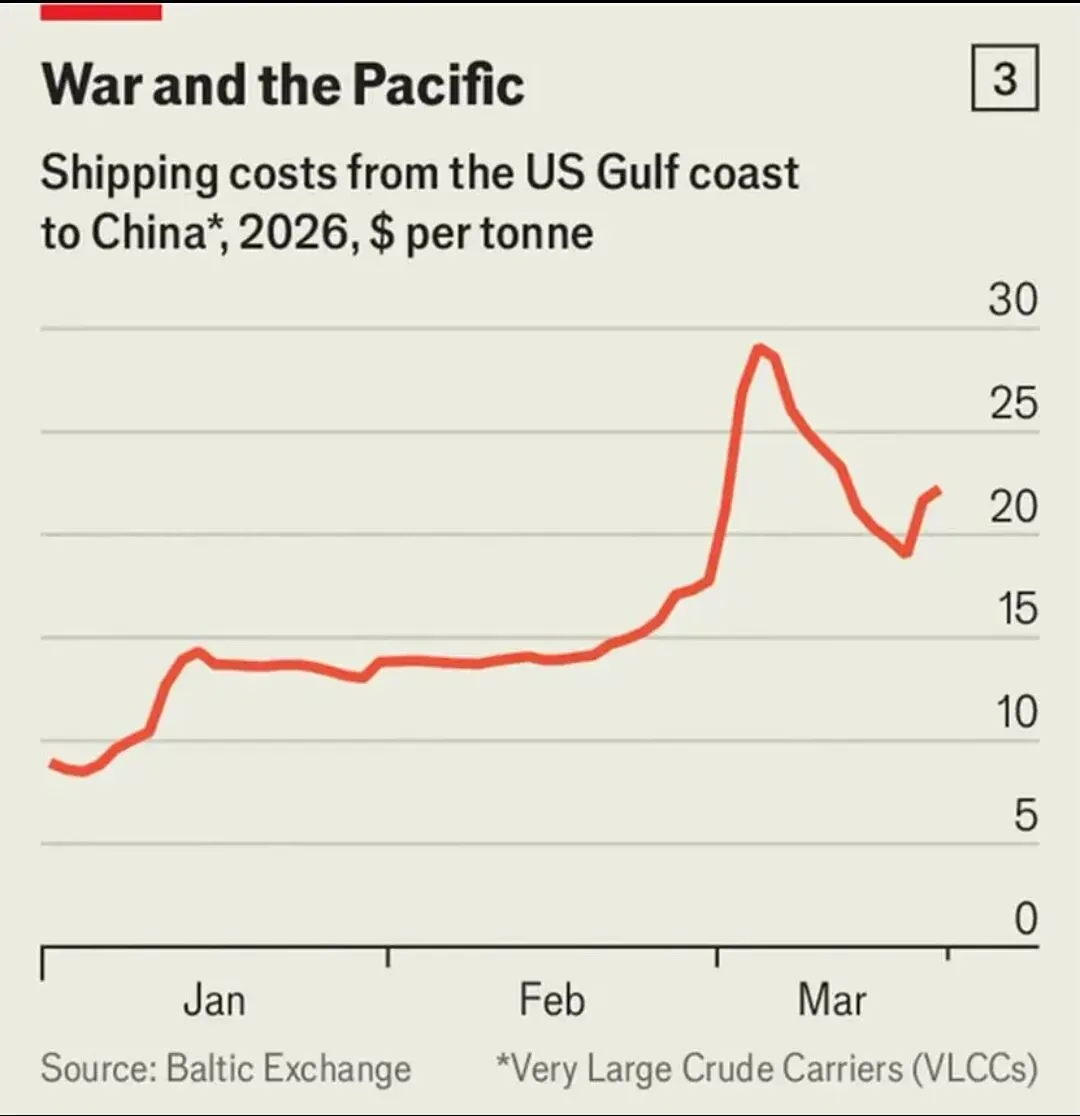
全球油轮船队的错位将导致进一步延误。战争爆发时,原本向亚洲运送中东原油的超级油轮纷纷转往大西洋寻找商机。当霍尔木兹海峡重启,许多油轮会选择完成现有航程(如在美国装油、在中国卸货)后再前往海湾(见图 3)。经纪公司 BSR 的 Andrew Wilson 表示,这种往返航程通常需要 90 天。
Even once Gulf crude belatedly reaches faraway refineries, this will not immediately relieve fuel shortages. Some in China, India, Malaysia and Thailand have closed whole units for want of raw material. Asian refiners’ total throughputis down by 3m b/d, or 8%. Once Gulf crude returns, revving those plants back up might take a few weeks. Emergency shutdowns in particular can take months to undo, says Ajay Parmar, a former engineer at TotalEnergies, a French energy giant. As with upstream production sites, restarting downstream refineries means checking and purging every pipe; restoring power, steam, cooling water and compressed-air systems; and heating processing units slowly to avoid cracking the metal. The same goes for LNG regasification plants.
最后,即便原油迟迟送达海外炼油厂,燃油短缺也不会立即缓解。中国、印度、马来西亚和泰国的许多炼油厂已因原料短缺关闭了整个单元。亚洲炼油厂的总吞吐量下降了 300 万桶/日,降幅达 8%。原油回归后,重启这些工厂可能需要几周。法国能源巨头道达尔能源(TotalEnergies)的前工程师 Ajay Parmar 表示,尤其是紧急停工后的恢复可能耗时数月。与上游生产厂类似,下游炼油厂重启意味着要检查和冲洗每一段管道;恢复电力、蒸汽、冷却水和压缩空气系统;并缓慢加热加工单元以防金属开裂。LNG 再气化站亦是如此。
Even if Donald Trump and Iran reached a deal to stop fighting tomorrow, it would thus be another four months before markets regained some semblance of normality. Producers elsewhere cannot crank up output fast enough to recover past losses. The result is to shave off some 3% of planned global oil production this year. Every month Ras Laffan stays shut, the world loses around 7m tonnes of LNG—nearly 2% of projected annual supply. And full capacity will, owing to the latest strikes, be lower than before. The upshot is that production will fall 4% short of demand this year even if Qatar started pumping what it can today.
因此,即便特朗普与伊朗明天就达成停火协议,市场也需要再过四个月才能恢复几分常态。其他地区的生产商增产速度无法弥补已造成的损失。结果是,今年全球原油计划产量将缩减约 3%。拉凡角工厂每停产一个月,全球就会损失约 700 万吨 LNG——接近全年预计供应量的 2%。由于近期的袭击,产能上限将低于战前。结果就是:即便卡塔尔今日复产,今年的产量仍将比需求低 4%。
The implications are stark. Global crude stocks, on course to end March in the bottom third of their historical range, will also keep dwindlingfor weeks after Hormuz reopens…
后果是严峻的。全球原油库存预计在 3 月底跌至历史区间的底部三分之一,且在海峡重启后的数周内仍将持续枯竭…
重点词汇:
1. scenario|/səˈnærioʊ/|n. 情景;设想|a possible situation
例句:Even the best-case scenario is disastrous. → 即便最佳情景也具灾难性。
2. disastrous|/dɪˈzæstrəs/|adj. 灾难性的|extremely bad or harmful
例句:The energy market outlook is disastrous. → 能源市场前景灾难性。
3. liquefied natural gas (LNG)|/ˈlɪkwɪfaɪd ˈnætʃrəl ɡæs/|n. 液化天然气|natural gas cooled to liquid
例句:a fifth of global LNG output is stranded. → 全球1/5液化天然气供应受阻。
4. stranded|/ˈstrændɪd/|adj. 滞留的;搁浅的|unable to move
例句:ships stranded in the Gulf. → 船只滞留在海湾。
5. Brent crude|/brent kruːd/|n. 布伦特原油|global oil benchmark
例句:Brent crude hit $112 a barrel. → 布伦特原油达112美元/桶。
6. hostilities|/hɑːˈstɪlətiz/|n. 战争;敌对行动|fighting or war
例句:prices 54% higher than before hostilities. → 较开战前涨54%。
7. put options|/pʊt ˈɑːpʃənz/|n. 看跌期权|options to sell at fixed price
例句:put options outnumber call options. → 看跌期权数量超看涨期权。
文末测验:
Q1: How long is the estimated repair time for the two liquefaction units at Qatar’s Ras Laffan plant that were damaged by missile strikes?
A. 1year
B. 7weeks
C. 3–5years
D. 6months
Q2: What is the primary challenge faced by Asian refiners in returning to full capacity once crude supply returns?
A. A total lack of skilled labor due to the war.
B. Emergency shutdowns can cause damage that takes months to undo.
C. Refineries have been converted to process biofuel instead.
D. New environmental regulations have banned the processing of Gulf crude.
以上为原文节选,欲阅读全文,欢迎购买我们的外刊精读专栏并加入粉丝群~(春季宠粉价!!最新鲜的第一手资讯,你值得拥有!)
下载app后即扫一扫即可加入阅览精读营所有文章~购买了的朋友别忘了私信加粉丝群哦~

——定期精选优质外刊精读文章、经典书籍,文章精选,话题丰富且与时俱进,契合考研、托福\雅思、GRE\GMAT等考试选题,以期帮助大家打破思维桎梏,发现未知的自己~
每日精选优质外刊文章
做你英语学习路上的好搭子!